
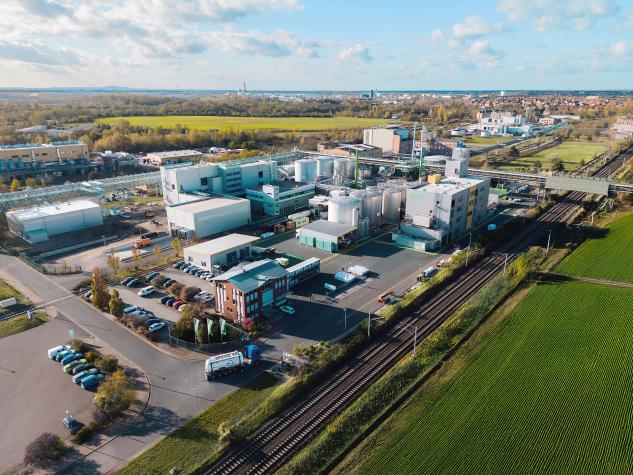
Verbio commissions RME ethenolysis plant
Submitted by:
Andrew Warmington
Verbio has commissioned the world’s first large-scale ethenolysis plant to use biobased feedstock at its site in Bitterfeld, Germany. The company has invested just under €100 million in the new technology and plans to manufacture up to 60,000 tonnes/year of biobased chemicals. Market ramp-up takes place in line with customer applications.
The facility uses rapeseed methyl ester (RME) sourced from existing biodiesel production at Bitterfeld. This is converted into functionalised carbon molecules via ethenolysis, a specific form of olefin metathesis, using highly selective Schrock catalysts from Verbio’s XiMo subsidiary at mild temperatures and moderate pressure, without solvents.
The facility is already is currently making 1-decene and methyl 9-decenoate (9-DAME) under the brand name ‘Verbio life chemicals’. Nominal capacities are 17,000 and 32,000 tonnes/year.
As a drop-in building block, iobased 1-decene can replace its fossilbased counterpart in existing chemical value chains. A key application is the manufacturing of polyalphaolefins for high-performance synthetic lubricants. It can also be used as a starting material for, among other things, vicinal diols, amines, epoxides and synthetic fatty acids.
9-DAME is platform molecule for further chemical syntheses, such as monomers, where a European supply chain can supplement castor oil from India. It also potentially opens up new applications for detergents and cleaning products that do not rely on fossil raw materials or tropical vegetable oils.