Feature article – Strength in diversity
Submitted by:
Andrew Warmington
Saltigo is navigating through tricky waters and reaping the benefits of a European presence. We spoke with senior executives at Chemspec
Astonishing though it may seem, Saltigo turns 20 this year. A subsidiary of Lanxess, which is not much older itself, Saltigo develops and produces custom products for the agrochemicals, pharmaceuticals and speciality chemicals sectors.
Saltigo supports projects from early-stage process development to multi-tonne commercial production, with a technology portfolio that includes high-pressure hydrogenation, phosgenation, fluorination, metathesis and flow chemistry, among others. It also offers various reactor concepts and process engineering expertise.
Whilst contract manufacturing is its major activity, the company also has some ‘own products’, mostly fine chemicals and active ingredient building blocks, plus Saltidin, an active ingredient for insect repellents. As such, it is something of a bellwether for the state of the fine and speciality chemicals sectors as a whole.
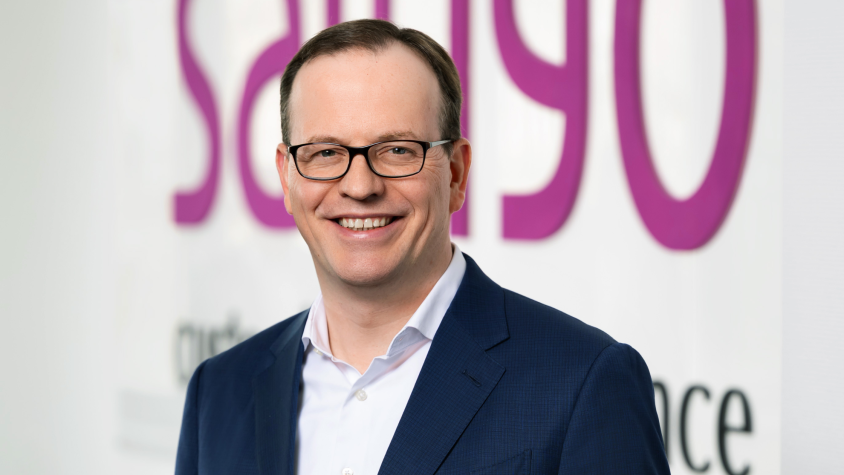
Naturally, Saltigo is always one of the most prominent exhibitors at Chemspec. It was here, in Cologne – just a few kilometres from its largest site at Leverkusen – on 6-7 June, that CEO Michael Schäfer and Dr Christoph Schaffrath, head of marketing and sales, shared their thoughts.
The agrochemicals market, Schäfer said, is still dominated by high capacity in China. Saltigo is increasingly interested in immediate opportunities in other sectors and is still on much the same path as in mid-2025. “We are continually adjusting to a broader portfolio, we can see that shift in the portfolio happening and we like very much the technology-driven things we are winning in,” he said.
In agro, similarly to last year, Saltigo is focusing on new actives and new technologies. Major commodity products are no longer a playground for European companies. Instead, it has added more new IP-protected, chemistry-derived intermediates for next-generation fungicides, herbicides and insecticides for major players.
“The change is not just that they are new; they are also getting more complex,” Schäfer added. “While volumes are going down – from kilograms to grams per hectare – the complexity is increasing.”
Supply chain security
Although Saltigo is not competing on volume and raw material are not a major proportion of its costs, it is not wholly insulated from the effects of the ongoing war in the Middle East. Costs for energy and key raw materials, notably sulphur, bromine and ammonia, are rising.
“That means that for many value chains it becomes more important to look for yield increases, reduced energy inputs, increased recycling rates and so on. It is also a reminder to many value chains around the world that supply security is key,” said Schäfer.
“Our location here in the centre of Europe is an advantage in this respect,” Schaffrath added. “One of the effects of the Middle East conflict means Saltigo being recognised as one of the strongest CDMOs, if not the strongest.”
In addition, being part of Lanxess, a committed owner for the long term, generates trust. Depending on how long the conflict continues, Schaffrath sees the ongoing focus on partnership growing. In certain complex chemistries, Saltigo is already working much earlier with customers on the development of synthesis routes.
Requests for China-free supply chains are increasing, notably from pharmaceutical players but also from start-ups who need to convince investors that they have resilient supply chains established with well-known players. This was a trend before the current conflict started but it is being accelerated as a result.
Growth in non-agro markets
Ligands and catalysts have become a growth business, partly because some polymer additives markets are also under regulatory pressure but the volumes are too small for the manufacturers to be involved in. Saltigo is now involved in some pilot projects in this field and expects to manufacture at scale later.
Saltigo has also been working on some own products for batteries that can both act as non-halogenated flame retardants and can also enhance battery performance and long-term capacity retention.. It is partnering with companies that supply bulk electrolytes and with Lanxess itself in flame retardants and with external companies in electronics.
“Electronics is not a big sales driver but it is one of the parts of our project pipeline with high potential,” Schaffrath says. Via Lanxess, Saltigo is back-integrated into PCl3 and hydrofluoric acid, which opens up potential uses as part of a local supply chain for some families of building blocks for these applications and polymers.
“We are unique in Europe in this respect. So far no one else is doing it but the battery industry also wants local supply chains. We would be the first in the market and therefore driving it. If we don’t drive these projects someone else will take us on.”
Saltigo stepped back from late-stage supply to the pharmaceuticals industry some years ago, closing its site in Washington State, but now the market has swung back from Asia, there are new opportunities for it here, according to Schäfer.
Two of its biggest signed projects are in this field and Saltigo’s strong chemistry capabilities in ISO pharmaceutical intermediates and registered starting materials make it a contender. “The pharmaceutical companies and GMP-focused CDMOs are amazed how well we are still established on the quality side.”