
Two invest in iron phosphate
Submitted by:
Andrew Warmington
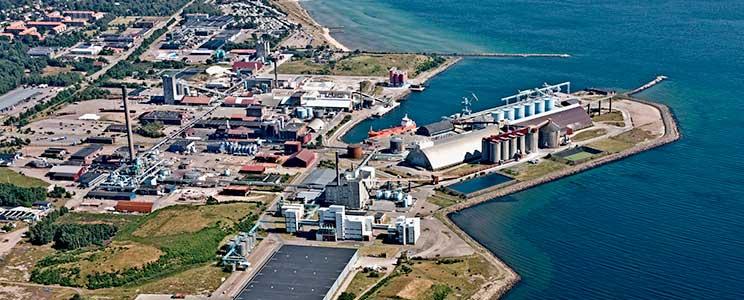
Two European-based speciality chemicals firms have separately announced advances towards local production of iron phosphate, with Kemira starting pilot operations at its site in Helsingborg, Sweden (pictured), and Lanxess opening a new battery laboratory at its Krefeld-Uerdingen site in Germany.
Iron phosphate is a core building block for the production of lithium iron phosphate (LFP) batteries, which are widely used in electric vehicles, energy storage systems, data centres and other industrial and infrastructure applications. Demand for these is growing globally due to their safety, durability and cost-competitiveness.
In China, about 75% of all electric vehicles already use this type of battery. In Europe, management consultancy Roland Berger has forecasts that LFP’s market share in batteries will rise from 10% now to 50% by 2030. Meanwhile value chains are emerging in Europe and North America to reduce dependency on Asian suppliers.
Kemira said that its new pilot facility bridges the gap between lab-scale development and potential industrial-scale production, enabling it to produce larger material volumes for testing, product qualification and process development. If customer qualification processes are successful and the market remains good, the company will evaluate future commercial-scale production.
Kemira described iron phosphate production as a “natural extension” of its experience in inorganic chemistry, iron-based chemistries, industrial process development and scaling up technologies. It added that it would be one of the first producers in Europe serving Western battery markets.
Meanwhile, Lanxess will use its new lab to test and develop battery materials based on iron oxide and iron phosphate directly in battery cells. This, the company said, will enable to assess the impact of different grades on cell performance, processability and suitability for specific applications more rapidly. The lab’s technical equipment is also suitable for other types of batteries, such as sodium-ion batteries, which use sodium iron pyrophosphate as their cathode material.
Lanxess has developed iron phosphate via iron and phosphoric acid, which produces far low volumes of saline wastewater than traditional methods. Also within this market, it offers ion-exchange resins, which are used to process and purify battery raw materials.