
Feature article - The changing shape of leadership in speciality chemicals
Submitted by:
Andrew Warmington
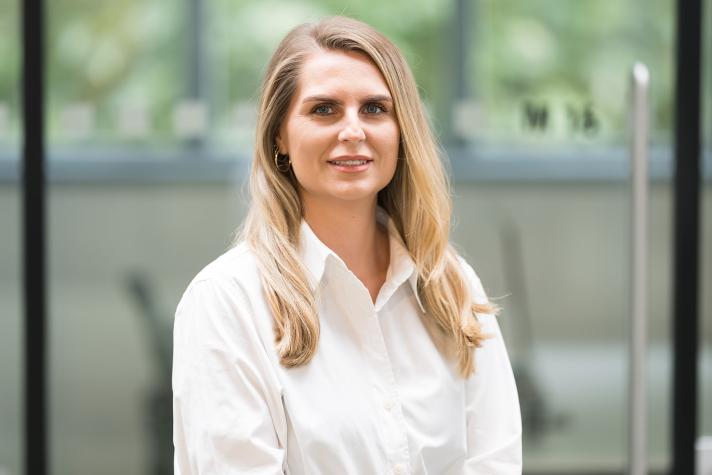
Natasha Klymczuk, founder and managing director of executive search firm Kelham Partners, looks at the changing expectations companies in this field have of their leaders
For much of the last decade, speciality chemicals companies competed aggressively for leadership talent capable of supporting growth, international expansion and portfolio diversification. Today, the conversation looks very different.
Across large multinationals, privately owned manufacturers and private equity-backed businesses alike, leadership expectations are tightening. Companies are hiring more cautiously, organisational structures are flattening and senior executives are increasingly being measured against operational and financial outcomes rather than functional expertise alone.
Despite continued uncertainty across parts of the chemicals market, hiring at senior level has not stopped. However, the type of leader companies are looking for has changed materially.
Many businesses are no longer hiring for potential future capability or incremental improvement. Instead, they are looking for individuals capable of making visible commercial and operational impact within a much shorter timeframe. That change is reshaping leadership teams across much of the speciality chemicals and ingredients industry.
Leaner organisations, broader roles
One of the clearest trends across the market is the continued flattening of organisational structures.
In many speciality chemicals businesses, responsibilities that were previously spread across multiple management layers are now being consolidated into smaller leadership teams. This is particularly visible within mid-sized manufacturers, distributors and private equity-backed companies, where pressure on margins and profitability has intensified over the past 18 months.
Commercial leaders are increasingly expected to understand operational realities in far greater detail than was historically the case. Raw material volatility, inventory management, plant utilisation and supply chain resilience are no longer viewed as purely operational concerns.
Equally, operations leaders are being drawn further into commercial discussions around customer priorities, product mix, pricing discipline and profitability. The distinction between commercial and operational leadership is therefore becoming less defined.
This shift is partly a response to more challenging market conditions. Demand across several end markets has remained uneven, particularly in parts of Europe, while customer destocking, energy costs and ongoing pricing pressure continue to affect many businesses. As a result, companies are placing greater emphasis on agility, accountability and faster decision-making.
Private equity ownership has accelerated some of these changes, particularly around leaner operating structures and performance visibility. However, similar trends are increasingly evident across larger global organisations as well. The result is that leadership roles are becoming materially broader than they were even a few years ago.
Technical credibility gains importance
At the same time, technical credibility is becoming increasingly valuable within commercial leadership positions. Many speciality chemicals markets have become both more competitive and more technically demanding. Customers are often looking for suppliers capable of contributing meaningful expertise around formulation, application performance and regulatory requirements, rather than simply managing transactional relationships.
This is particularly visible in markets such as personal care ingredients, CASE, advanced materials and pharmaceutical excipients, where differentiation increasingly depends on technical performance and application support. Consequently, companies are placing greater value on leaders who can move comfortably between commercial and technical discussions.
Commercial teams are often expected to engage credibly with R&D, procurement and manufacturing stakeholders while also managing increasingly complex customer relationships. In many organisations, technical understanding is no longer viewed as a specialist capability limited to laboratory or product development functions.
That does not necessarily mean that every commercial leader requires a formal scientific background. However, the ability to understand technical complexity and translate it into commercial value is becoming significantly more important. Many of the strongest commercial leaders in the sector are now those capable of connecting technical differentiation, operational capability and customer strategy into a coherent market position.
Performance measured differently
Historically, leadership evaluation within parts of the industry could be relatively broad and relationship-driven. Today, there is considerably greater scrutiny on measurable operational and financial outcomes. Executive teams and investors are placing increasing focus on metrics such as margin improvement, pricing execution, manufacturing reliability, inventory control and on-time in-full delivery.
Growth alone is often no longer sufficient. Increasingly, businesses are looking for profitable growth, operational discipline and clearer accountability. This is influencing leadership behaviour across many organisations.
Commercial leaders are being asked to demonstrate stronger ownership of profitability and portfolio performance. Operations leaders are increasingly expected to understand customer impact and commercial priorities alongside manufacturing efficiency and safety performance.
At the same time, tolerance for siloed decision-making appears to be reducing. Many businesses are placing greater emphasis on leaders capable of operating effectively across functions, particularly during periods of uncertainty or organisational change. Communication, alignment and execution speed are becoming increasingly important leadership characteristics. This is especially relevant in businesses undergoing restructuring, portfolio rationalisation or operational transformation programmes.
Adaptability becomes critical
Another notable change is the growing importance of adaptability. Experience remains highly valuable within speciality chemicals, particularly in technically complex or highly regulated markets. However, companies are increasingly recognising that experience alone does not always guarantee success when leaders move between different operating environments.
Transitions between large multinational organisations and smaller entrepreneurial or private equity-backed businesses can be particularly challenging. Decision-making cycles are often faster in smaller organisations. Leadership visibility is typically higher and resources may be more constrained. Individuals accustomed to larger corporate structures do not always adapt easily to those conditions.
Equally, leaders moving from leaner businesses into large global organisations may struggle with matrix structures, slower governance processes or organisational complexity. In many cases, the challenge is not capability. It is environmental fit.
As a result, companies are placing greater emphasis on leadership style, adaptability and resilience during senior hiring processes. The ability to operate effectively through ambiguity, competing priorities and organisational change has become increasingly valuable across the sector.
Evolving expectations
The speciality chemicals industry remains fundamentally driven by innovation, technical expertise and long-term customer relationships. Those foundations are unlikely to change. What is changing is the breadth of capability now expected from leadership teams.
Future leaders within the sector will likely need stronger cross-functional understanding, greater commercial awareness and a clearer appreciation of operational realities than previous generations. Technical expertise remains essential, but increasingly it must sit alongside broader business capability.
In many respects, leadership expectations within speciality chemicals are not becoming simpler, they are becoming more concentrated.
Contact:
Natasha Klymczuk
Founder & Managing Director
Kelham Partners